
Waking with a sore jaw, dull headaches, or flattened teeth usually points to bruxism, the clinical term for clenching and grinding, and it is extremely common rather than rare. Most adults grind occasionally during periods of stress and never suffer lasting harm. It becomes a genuine problem when it happens nightly, wears through enamel, cracks fillings, or triggers persistent jaw joint pain. Bruxism itself is not dangerous, but the damage it causes is cumulative and permanent, which is why an early evaluation at a dental clinic in North York Toronto is worth arranging as soon as you notice the pattern.
The difficulty with grinding is that it mostly happens while you are asleep. Many people only discover it when a partner mentions the noise, or when a dentist points out wear facets that should not exist at their age.
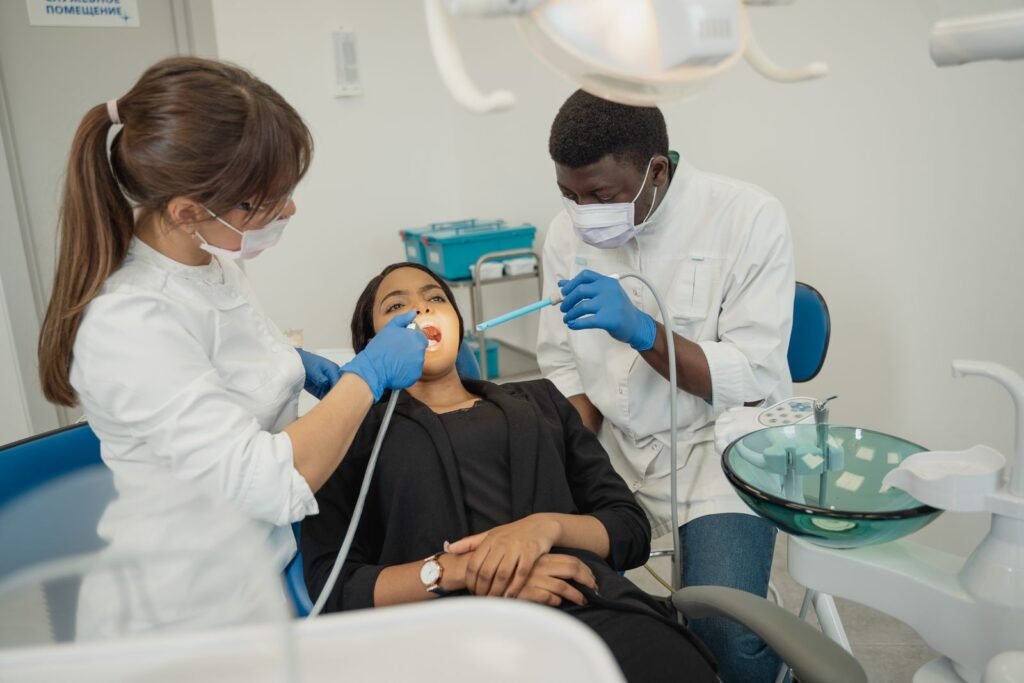
Routine examinations are the main safety net here. During a standard checkup within general and family dentistry, a dentist compares wear patterns against your age, checks the jaw joint, and records changes over time.
Where grinding has already fractured cusps or destroyed old fillings, protective restorations such as dental crowns can rebuild the tooth to its correct shape and shield it from further splitting.
For front teeth that have become short, chipped, or uneven, conservative options like porcelain veneers may restore both length and appearance once the grinding has been brought under control.
To have your jaw joint, muscles, and wear pattern assessed, request an appointment online or speak to the team on +1 437-525-2715.
What Is Bruxism?
Bruxism is repetitive jaw muscle activity involving clenching or grinding of the teeth. It is divided into two types:
- Sleep bruxism: occurs during sleep, is largely involuntary, and is linked to arousal responses in the sleep cycle.
- Awake bruxism: daytime clenching, often associated with concentration, stress, or posture, and more consciously controllable.
The two behave differently and often require different management, which is why an accurate history matters as much as the clinical examination.
Signs and Symptoms to Look For
What You Might Notice
- Jaw stiffness or fatigue on waking
- Dull headaches around the temples, especially in the morning
- Earache with no ear infection
- Clicking, popping, or locking of the jaw joint
- Teeth that feel sensitive to cold along the gumline
- Disturbed sleep for you or your partner
What a Dentist Notices
- Flattened, polished wear facets that match on upper and lower teeth
- Small vertical cracks in enamel
- Notch-shaped defects where the tooth meets the gum
- Repeatedly fractured fillings or chipped porcelain
- A scalloped border along the edges of the tongue
- Enlarged masseter muscles at the angle of the jaw
What Causes Teeth Grinding?
Bruxism rarely has a single cause. Contributing factors usually stack together:
- Stress and anxiety. The most commonly reported association, particularly for awake clenching.
- Sleep-disordered breathing. Snoring and obstructive sleep apnoea are strongly linked with sleep bruxism, and this connection should always be screened for.
- Bite irregularities. A high filling or crowded teeth can contribute, though this is a smaller factor than once believed.
- Medications and stimulants. Certain antidepressants, caffeine, nicotine, and recreational stimulants increase muscle activity.
- Alcohol. It fragments sleep architecture and often worsens grinding.
- Genetics. Bruxism frequently runs in families.
Why Untreated Grinding Matters
Enamel does not regenerate. Once it is worn away, the softer dentine beneath erodes several times faster, which is why damage often seems to accelerate suddenly after years of slow change. Long-term consequences include:
- Loss of tooth height and a collapsed bite
- Increased sensitivity and higher decay risk on exposed dentine
- Cracked teeth that may need root canal treatment or extraction
- Chronic muscle pain and temporomandibular joint dysfunction
- Gum recession in some patients
Night Guard vs Other Options: A Comparison
| Option | What it does | Best suited to |
| Custom night guard | Distributes force and protects enamel | Most patients with sleep bruxism |
| Over-the-counter boil-and-bite guard | Basic barrier, often bulky and poorly retained | Very short-term or trial use only |
| Stress management and physiotherapy | Reduces muscle activity and tension | Awake clenching and muscular pain |
| Sleep assessment | Identifies underlying airway problems | Patients who snore or wake unrefreshed |
| Restorative rebuilding | Replaces lost tooth structure | Established wear with functional or aesthetic impact |
A custom guard does not stop grinding. It protects the teeth and often reduces muscle soreness while the underlying cause is addressed.
How a Custom Night Guard Is Made
- Examination and diagnosis, including photographs and a record of existing wear.
- A digital scan or impression of both arches, plus a bite registration.
- Laboratory fabrication in a hard or dual-laminate material chosen for your grinding pattern.
- Fitting appointment, where the guard is adjusted so contact is even across all teeth.
- Review after a few weeks to check comfort, fit, and symptom improvement.
Myths About Grinding and Dental Discomfort
Myth: Only stressed people grind their teeth. Stress is a factor, but sleep breathing disorders, medications, and genetics are equally relevant.
Myth: A drugstore guard is just as good. Ill-fitting guards can shift teeth, encourage more clenching, or become a choking hazard. A custom device is measured to your bite.
Myth: Jaw pain always means arthritis. Most jaw pain is muscular and responds to conservative care. True joint degeneration is far less common.
Myth: Nothing can be done until the damage is severe. Early protection is significantly cheaper, simpler, and more conservative than rebuilding a worn bite later.
Practical Steps You Can Take Tonight
- Keep your teeth apart when not eating. Lips together, teeth slightly apart is the resting position.
- Apply a warm compress to the jaw muscles for ten minutes before bed.
- Stop caffeine after mid-afternoon and limit alcohol close to bedtime.
- Build a consistent wind-down routine and reduce screen time before sleep.
- Note whether you snore or wake unrefreshed, and mention it at your appointment.
Safety note: persistent jaw locking, severe facial pain, or numbness needs professional evaluation. This article is general information and does not replace an individual diagnosis by a licensed dental professional.
Personalised Care for Bruxism in North York
Honey Smile Dentistry is a premium boutique dental clinic in Toronto serving the North York community, with an emphasis on comfort, advanced technology, and care planned around the individual rather than a checklist. The setting is intentionally welcoming and sophisticated, and appointments are paced so there is time to talk through findings properly.
The practice is accepting new patients and provides preventive care, custom night guards, teeth whitening, dental implants, cosmetic dentistry, and restorative treatment for worn teeth. You can contact the clinic directly, call +1 437-525-2715, or email info@honeysmiledentistry.ca with questions before booking anything.
The clinic is at 12 Inn on the Park Dr, Toronto, ON, Canada, M3C 0P9, with easy online booking and same-day options where availability allows. Treatment is always delivered by licensed dental professionals, with follow-up appointments built in so wear can be monitored rather than guessed at.
Reading the Wear Pattern on Your Own Teeth
Tooth wear is one of the few dental problems you can partly assess yourself in a mirror, and knowing what to look for helps you raise it at the right time rather than years later.
- Flattened canine tips. Canines should have a distinct point. A flat canine in an adult under 40 is a strong indicator of grinding.
- Shiny facets. Polished, glassy areas that match precisely against a tooth in the opposite arch.
- Cupping. Small dished depressions on molar cusps where dentine has worn faster than surrounding enamel.
- Chipped enamel at the edges. Especially on upper front teeth.
- Fractured restorations. Fillings or porcelain that repeatedly break in the same place.
- Notches at the gumline. Wedge-shaped defects where the tooth flexes under load.
The Sleep Connection Most People Miss
Sleep bruxism is closely associated with brief arousals from sleep, and one of the most important causes of those arousals is disordered breathing. Screening for this is now considered good practice rather than optional.
Signs Worth Reporting
- Loud or habitual snoring
- Witnessed pauses in breathing
- Waking with a dry mouth or sore throat
- Morning headaches
- Daytime sleepiness despite adequate hours in bed
- Waking frequently without an obvious reason
If several of these apply, a dentist may suggest a medical sleep assessment before fitting an appliance, because treating the airway can reduce grinding at source rather than simply shielding the teeth from it.
Types of Night Guard Compared
| Type | Material | Best for | Limitations |
| Soft guard | Flexible EVA | Light grinders, short-term use | Can encourage chewing in heavy grinders |
| Hard acrylic | Rigid | Heavy grinders, durability | Takes longer to adapt to |
| Dual laminate | Soft inner, hard outer | Comfort with durability | Bulkier than hard acrylic |
| Anterior deprogrammer | Rigid, small | Short-term diagnostic use | Not for unsupervised long-term wear |
Fit and even contact matter more than material choice. A guard that touches on only a few teeth can move them over time, which is why professional adjustment and periodic review are important.
Rebuilding a Worn Bite: What Is Involved
When wear has progressed to the point where teeth are visibly shorter or the bite has collapsed, treatment moves beyond protection into reconstruction. This is planned carefully and in stages.
- Records. Photographs, digital scans, bite registration and sometimes a facebow to relate the jaws accurately.
- Diagnostic wax-up or digital design. The proposed new tooth shapes and heights are designed before any treatment begins.
- Provisional phase. Temporary restorations test the new bite for comfort, speech and muscle response, often for several weeks.
- Definitive restorations. Crowns, onlays or veneers are placed once the trial phase is confirmed comfortable.
- Protection. A night guard is made to protect the completed work, which is essential rather than optional.
Skipping the provisional phase is the single most common cause of dissatisfaction in full-mouth rehabilitation. Testing before committing protects both comfort and result.
Physiotherapy and Self-Management That Genuinely Helps
- Gentle controlled opening exercises, repeated a few times daily rather than forcefully.
- Massage of the masseter and temporalis muscles with light circular pressure.
- Posture correction, since forward head posture increases jaw muscle load.
- Breathing and relaxation techniques before sleep.
- Setting phone reminders during the day to check that your teeth are apart.
- Reducing evening caffeine, alcohol and screen exposure to improve sleep quality.
Frequently Asked Questions
How do I know if I grind my teeth at night?
Common clues are morning jaw soreness, temple headaches, chipped or flattened teeth, and a partner hearing grinding sounds. A dentist can confirm it by examining wear facets and muscle tone.
Will a night guard stop me from grinding?
Not usually. It protects your teeth from the force and often eases muscle discomfort, while the underlying triggers such as stress or disturbed sleep are managed separately.
How long does a custom night guard last?
Most last between two and five years depending on how heavily you grind and the material used. Bring it to every checkup so it can be inspected and adjusted.
Can children grind their teeth?
Yes, and it is common during the mixed dentition years. It often resolves on its own, but it should still be monitored, especially if there is snoring or noticeable wear.
Does treating grinding help headaches?
Many patients report fewer morning headaches once muscle overactivity is reduced. Headaches have many causes, so persistent symptoms should also be reviewed by your physician.
Conclusion
Teeth grinding is common, often silent, and entirely manageable once it is identified. Protecting enamel early is far simpler than rebuilding a worn bite years later. If your jaw aches in the morning or your teeth look shorter than they used to, a straightforward examination will give you clear answers.