
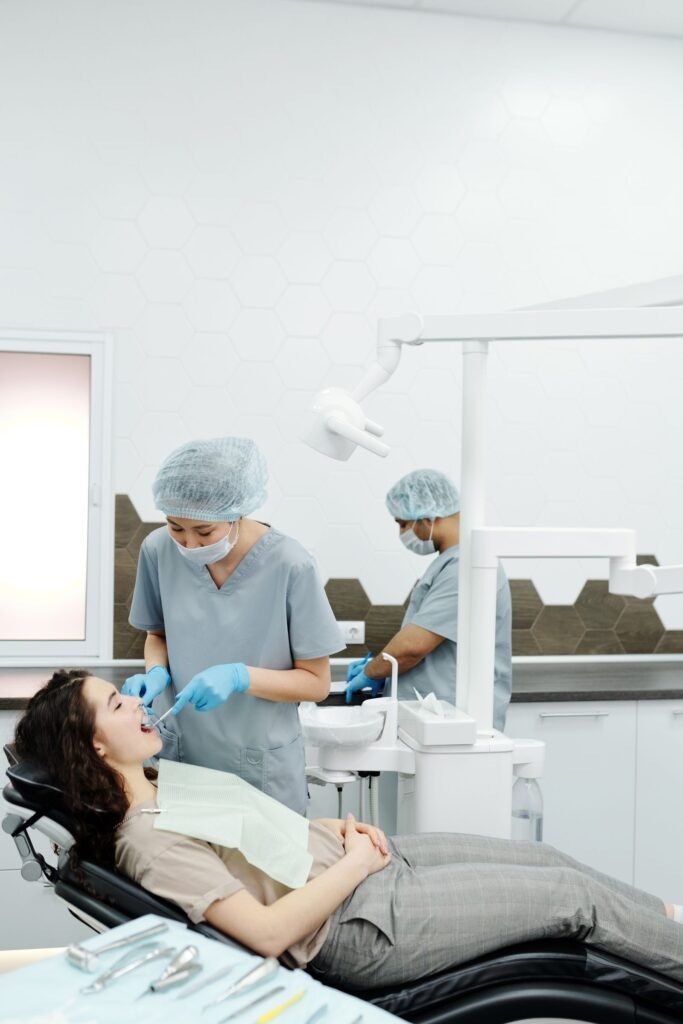
Sudden pain when you sip cold water or bite into something sweet usually means the protective outer layer of your tooth has thinned, or your gum line has pulled back and exposed the sensitive dentine underneath. In most cases this type of sensitivity is common and treatable rather than dangerous. It becomes serious only when discomfort lingers for more than 30 seconds, wakes you at night, or arrives with swelling, and that is the point at which an assessment at a dental clinic in Toronto should not be postponed.
Tooth sensitivity, known clinically as dentine hypersensitivity, affects roughly one in three adults at some stage of life. It is one of the most frequent concerns raised with any dentist in Toronto, and the encouraging part is that the causes are well documented and highly manageable.
Many patients first notice it with iced drinks, cold winter air, or citrus. Others feel it briefly after a brightening treatment, which is an expected and temporary reaction. Professionally supervised teeth whitening includes desensitising agents for exactly this reason, which is why unsupervised drugstore kits so often cause more discomfort than clinical care ever does.
Sensitivity can also signal structural wear that needs rebuilding rather than simply soothing. Where enamel loss has altered the shape, edge, or shade of a tooth, conservative cosmetic dentistry can restore the surface and seal exposed dentine in the same appointment.
In more advanced cases where a tooth has fractured beyond saving or has already been lost, modern dental implants restore both chewing function and the natural contour of the bite. That matters because an uneven bite overloads neighbouring teeth and is itself a frequent trigger for sensitivity.
If cold sensitivity has quietly become part of your daily routine, the quickest way to understand why is a proper clinical examination. You can request an appointment online in a couple of minutes, and the practice is currently welcoming new patients.
What Is Tooth Sensitivity?
Tooth sensitivity is a short, sharp pain triggered by a stimulus such as cold, heat, sweetness, acidity, or physical touch. It occurs when dentine, the porous layer beneath enamel, loses its protective covering.
Dentine contains thousands of microscopic tubules that run toward the nerve inside the tooth. When those tubules are open, changes in temperature or pressure move fluid within them, and the nerve reads that movement as pain. This is described as the hydrodynamic theory, and it explains why the sensation is immediate and why it disappears just as fast.
Sensitivity Versus Toothache: How to Tell Them Apart
- Sensitivity: sharp, lasts a few seconds, only with a trigger, stops when the trigger is removed.
- Toothache from decay or infection: dull or throbbing, lingers, can begin without any trigger, often worse when lying down.
- Cracked tooth: pain specifically on biting down or on releasing pressure.
- Gum-related pain: tenderness spread across several teeth, bleeding when brushing, an unpleasant taste.
The distinction is clinically important. Lingering pain is a warning sign of pulp inflammation and needs a diagnosis, not a desensitising toothpaste.
Is Cold Sensitivity Common, Temporary, or Serious?
The short answer is that it is usually common and temporary, and occasionally serious.
- Common and temporary: after a professional cleaning, after whitening, after a new filling, or while breathing cold air during a Toronto winter. This normally settles within days to a few weeks.
- Persistent but manageable: gum recession, dietary enamel erosion, or night-time grinding. These need treatment but are not emergencies.
- Potentially serious: pain that starts spontaneously, lasts beyond 30 seconds, or comes with swelling, a foul taste, or a loose tooth. This can indicate irreversible pulpitis, an abscess, or a fracture, and it deserves same-day attention from an emergency dental clinic in Toronto.
What Causes Tooth Sensitivity?
1. Enamel Erosion
Enamel is the hardest tissue in the human body, yet it dissolves in acid. Frequent exposure to sparkling water, citrus, wine, sports drinks, and coffee softens the surface. Brushing straight after acidic food or drink then scrubs that softened layer away.
2. Gum Recession
When gum tissue migrates away from the crown, it uncovers root surfaces that were never designed to be exposed. Root dentine is far more permeable than enamel, so the sensitivity is often intense. Heavy-handed brushing, periodontal disease, and inherited thin gum tissue all contribute.
3. Bruxism and Clenching
Night-time grinding flattens cusps, creates hairline cracks, and wears through enamel on the biting surface. Many people have no idea they grind until a dentist identifies the wear pattern.
4. Notching at the Gum Line
Repeated flexing of a tooth under heavy bite forces can produce wedge-shaped notches where the tooth meets the gum. These notches are a classic sensitivity hotspot and are simple to seal once identified.
5. Decay, Leaking Fillings, and Cracks
A cavity that has reached dentine, an older restoration with a gap at its margin, or a cracked cusp will each allow stimuli to travel toward the nerve.
6. Recent Dental Treatment
Deep fillings, crown preparation, scaling, and whitening can all cause short-lived sensitivity while the pulp settles. This is anticipated and should improve steadily rather than worsen.
Warning Signs You Should Not Ignore
- Pain that continues for more than half a minute after the trigger is gone.
- Throbbing that begins on its own, especially at night.
- Sensitivity confined to one single tooth that is progressively worsening.
- Visible dark spots, holes, or a chipped edge.
- Swelling of the gum, cheek, or jaw.
- A tooth that has darkened compared with its neighbours.
- Gums that bleed easily or have visibly receded.
Each of these warrants a professional opinion. Managing a dying nerve with sensitivity toothpaste only delays diagnosis and can turn a simple problem into a complicated one.
How a Dentist Diagnoses the Cause
Accurate diagnosis is what separates lasting relief from temporary masking. A thorough assessment generally follows these steps:
- History taking. What triggers the pain, how long it lasts, when it began, plus diet, brushing habits, and any grinding history.
- Visual examination. Checking for erosion, gum-line notching, recession, wear facets, cracks, and failing restorations.
- Cold and percussion testing. Isolating the specific tooth and gauging whether the pulp response is normal, exaggerated, or absent.
- Digital radiographs. Low-dose images reveal decay beneath fillings, bone loss, and changes at the root tip that are invisible to the eye.
- Bite analysis. Identifying heavy contacts that overload individual teeth.
- Periodontal charting. Measuring pocket depths and recession to quantify how much root surface is exposed.
Only after this can treatment be matched to the real cause instead of the symptom.
Treatment Options Compared
At-Home Measures
- Potassium nitrate toothpaste: calms nerve signalling, and needs consistent use for two to four weeks.
- Stannous fluoride or arginine formulations: physically occlude open dentine tubules.
- Soft brush and gentle technique: prevents further mechanical wear.
- Diet timing: rinse with water after acidic items and wait 30 to 60 minutes before brushing.
- Fluoride mouthrinse: supports remineralisation of softened enamel.
In-Clinic Treatments
- High-concentration fluoride varnish: seals tubules and hardens the surface.
- Resin desensitisers and bonding agents: create a durable physical barrier over exposed dentine.
- Composite restoration of notched areas: covers the sensitive zone and rebuilds tooth contour.
- Custom night guard: shields teeth from grinding forces.
- Bite adjustment: redistributes pressure away from overloaded teeth.
- Periodontal therapy or gum grafting: for recession-driven sensitivity.
- Root canal therapy: reserved for teeth where the pulp is irreversibly inflamed.
Quick Comparison Summary
- Speed of relief: clinical treatment often works within one visit, while toothpaste takes weeks.
- Durability: bonded restorations and night guards treat the cause, whereas toothpaste manages the symptom.
- Cost of delay: erosion and grinding progress silently and eventually demand larger restorations.
- Best approach: a combination of both, guided by diagnosis.
Common Myths About Dental Pain and Anxiety
Myth: sensitivity means you need a root canal. The overwhelming majority of sensitive teeth need nothing more than sealing, a small restoration, or a night guard.
Myth: treating sensitivity is painful. Desensitising varnishes and bonded restorations are among the most comfortable procedures in dentistry and frequently require no anaesthetic at all.
Myth: whitening permanently damages enamel. Supervised whitening at appropriate concentrations, with desensitising protocols, does not weaken enamel. Unregulated products used without assessment can.
Myth: if it comes and goes, it can wait. Intermittent pain is precisely how cracks and early decay behave before they become urgent.
Myth: nervous patients cannot be treated comfortably. Modern topical anaesthetics, slow-delivery injections, and an unhurried appointment structure make treatment realistic even for people who have avoided care for years.
Preventing Sensitivity Long Term
- Brush twice daily with fluoride toothpaste using a soft brush and light pressure.
- Clean between the teeth every day to protect the gum margin.
- Limit the frequency, not only the quantity, of acidic food and drink.
- Use a straw for acidic beverages and avoid holding them in the mouth.
- Wear a custom night guard if you clench or grind.
- Keep to recommended intervals for professional cleanings and examinations.
- Report new sensitivity early instead of waiting for it to escalate.
Personalised Care in a Premium Boutique Setting
Honey Smile Dentistry is a premium boutique practice in the North York area of Toronto, built around comfort, advanced technology, and genuinely personalised care. The environment is deliberately welcoming and sophisticated, because a calm setting does more for an anxious patient than any single clinical technique.
The team delivers preventive and general dentistry alongside whitening, implants, and cosmetic treatment, and the practice continues to accept new patients from across the city. Being regarded as a top dentist in Toronto or the best dentist in North York comes down to unhurried diagnosis, plain-language explanation, and treatment that respects healthy tissue.
Appointments can be arranged online or by phone on +1 437-525-2715, and questions are always welcome by email at info@honeysmiledentistry.ca. The clinic is located at 12 Inn on the Park Dr, Toronto, ON, Canada, M3C 0P9, with flexible scheduling that includes same-day options when discomfort is urgent.
Dental care should always be provided by a licensed professional registered with the Royal College of Dental Surgeons of Ontario. This article offers general information and is not a substitute for an in-person diagnosis. Any persistent symptom should be assessed directly so that treatment and follow-up care can be planned properly.
Frequently Asked Questions
How long does tooth sensitivity usually last?
Sensitivity that follows a cleaning, a filling, or a whitening session generally fades within a few days to two weeks. Sensitivity caused by recession or erosion persists until the exposed surface is sealed or restored, so it does not resolve on its own.
Can sensitive teeth heal without treatment?
Mild early enamel softening can remineralise with fluoride and better diet timing. Once dentine is physically exposed through wear, notching, or gum recession, it cannot regenerate and needs professional sealing or restoration.
Is it safe to whiten sensitive teeth?
Usually yes, provided a dentist has first excluded decay, cracks, and gum disease and has selected a suitable concentration with a desensitising protocol. Problems arise when an undiagnosed sensitive tooth is whitened without assessment.
Why is only one tooth sensitive?
Isolated sensitivity in a single tooth is more concerning than generalised sensitivity. It often points to a crack, a leaking restoration, decay, or early pulp inflammation, so it should be examined promptly.
Does sensitivity always mean I have a cavity?
No. Many sensitive teeth are entirely free of decay. Because decay is one possible cause and cannot be ruled out visually at home, an examination with radiographs remains the only reliable way to be sure.
Conclusion
Tooth sensitivity is common, well understood, and usually straightforward to treat once the true cause has been identified. The important step is separating harmless short-term sensitivity from the warning signs of decay, cracks, or gum disease. A professional assessment replaces guesswork with a clear plan and lasting comfort.